News
Majority condemns correbous
Barcelona, March 7, 2012. - Following the news published in the media about the existence of a draft Regulation of Law 34/2010 which regulates the correbous, Ong ADDA has considered it necessary to ask the Catalan citizens what they think about traditional celebrations where bull runs or “correbous” are a part of the festivities. Ong Adda commissioned SIGMADOS to produce an opinion poll, broken down into four provinces: Barcelona, Girona, Lleida and Tarragona. The study results were presented and distributed to the media at a press conference held in Barcelona on March 6, 2012.
The results of the poll are the following:
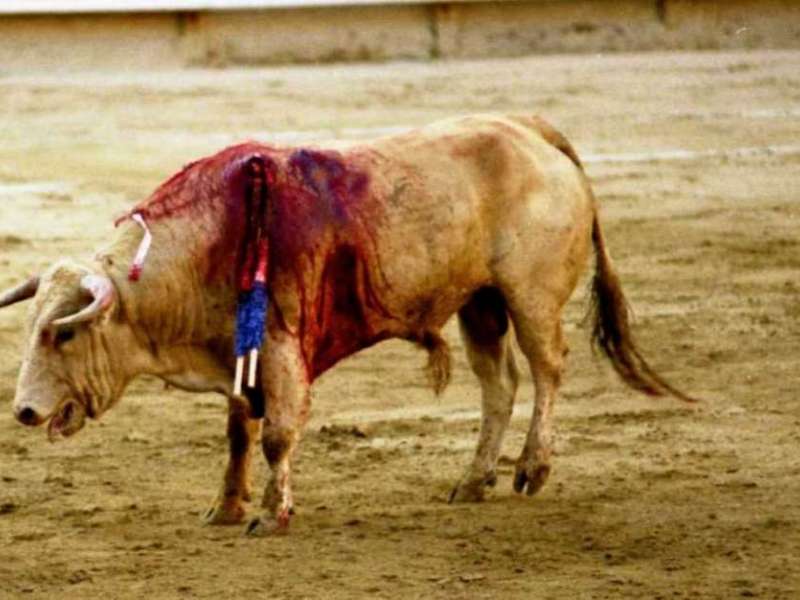
• 99.6% of Catalans consider that animals should be treated with respect. • 90.3% of Catalans consider that there is no justification for animal mistreatment and suffering as a part of festivities or for “fun”. • 75.5% of Catalans consider that during correbous the bulls suffer and are maltreated. • 68% of Catalans think these shows should not continue to exist. • 64.4% of Catalans disagree with the law (34/2010), passed by the Catalan Parliament, which regulates correbous. Since its foundation, Ong ADDA has always maintained the same opinion regarding any celebration which makes animals suffer, rejecting categorically the practices of bou capllaçat (roped bull) and bou embolat (bull of fire), and any other type of abuse .
Ong ADDA believes that these celebrations are more typical of medieval times although regrettably recognizing their popular support in the region of Delta d’ Ebre (Tarragona), where awareness-raising campaigns are very much needed. Ong ADDA thinks that the Regulations should include or allow only those festivals where bulls run through the streets - as indicated by the word corre – bou (bull run) . During these bull runs, the animals must not be pushed, beaten or harassed. The bulls should always be under strict surveillance and in compliance with Article 6.2 of the revised text of the Catalan Law of Protection of Animals (22/2003) which prohibits inflicting harm on the animals during the course of the correbous.